Unit plans · Design
C02 Dragsters
Design1 term18 lessons
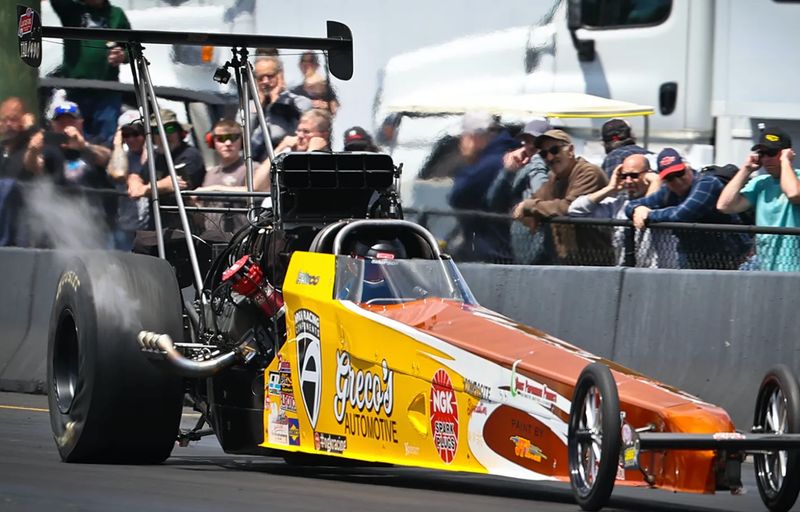
In this term-long design unit, students work toward Race Day by building a dragster. They begin by co-constructing what design means, learning about the Three Cs and how to use a Project Board and Kanban to track their work. Students then move into sustained studio practice, starting with their first move and maintaining agency throughout their build process. Across multiple studio sessions, they make design decisions, photograph their progress, and tidy their work tracking as they develop their cars.
Throughout the unit, students learn to question their steps, set meaningful milestones, and manage their own workflow in a shared studio space. They document their thinking and their dragster's development, preparing to race their finished vehicles on Race Day. An Agency Final Evaluation at the end captures their growth in taking ownership of their design process.
The lessons
1
Class 1 - Intro (7 May)
45 min · 7 activities
Lesson shape
Opening5 minMini-lesson10 minWork time25 minDebrief5 min- OpeningWritten answer5 min
Co-construct definition
In your own words: what does AGENCY mean for the next 7 weeks of design? Pair-share with the person next to you, then write your own definition.
- Mini-lessonReading5 min
The Three Cs
Choice — autonomy. You decide what to do next, when to do it, and how. You don't wait to be told.
Causation — because-clauses. You can explain why you made each choice. "I sanded with 220 because 80 was leaving deep scratches" is causation. "I sanded because I was supposed to" isn't.
Change — iteration. Your choices change something — your design, your pace, your approach. If a choice didn't change anything, why did you make it?
Every survey, every journal entry, and every check-in comes back to these three.
- Choice: You decide what to do next, when to do it, and how. You don't wait to be told.
- Causation: You can explain why you made each choice. "I sanded with 220 because 80 was leaving deep scratches" is causation. "I sanded because I was supposed to" isn't.
- Change: Your choices change something — your design, your pace, your approach. If a choice didn't change anything, why did you make it?
- Work timeQuestion steps10 min
Lock in your three first-day commitments. You'll re-read these mid-unit.
- Design philosophy
- Biggest risk
- Fallback plan
- Work timeReading5 min
How the Project Board works
= the cards that get you to each milestone. A milestone like "Body shaped" doesn't happen in one go — it's bandsaw + sand + check-weight. Each of those is a Kanban card.
The rule: every Kanban card moves toward a milestone. If a card doesn't, ask why you're doing it.
- Timeline (top half): = your big milestones. Four fixed dates between today and race day. "By X date, I will have finished Y."
- Kanban (bottom half): = the cards that get you to each milestone. A milestone like "Body shaped" doesn't happen in one go — it's bandsaw + sand + check-weight. Each of those is a Kanban card. The rule: every Kanban card moves toward a milestone. If a card doesn't, ask why you're doing it.
- Work timeReading5 min
Set your milestones — guided
Open the Project Board (right rail → "Project Board" tab → Timeline section).
Step 1. Set Race day = 11 June in the Race day field at the top.
Step 2. Click "+ Add milestone" four times. Working backward from race day, set these:
- Wheels decided — 15 May (reuse last year's CAD or redesign — commit by Class 3)
- Body cut + shaped — 1 June (bandsaw + 80→220 grit done)
- Painted + dry — 8 June (undercoat + colour, with a day to dry)
- Race ready — 10 June (assembled + tuned + roll test passed)
Step 3. If a date feels wrong for YOUR pace, drag it. The traffic-light dot tells you if you're on track once we're in the unit.
You'll review these on every check-in. Not set in stone, but you ARE accountable for moving the dates if reality slips.
- Work timeReading5 min
Set up your Kanban — guided
Optionally add a quick note about what you learned.
- Step 1. Click "+ Add card" in the Backlog column: Add these starter cards: (examples only) - Wheels — decide: reuse last year's CAD or redesign in Onshape - Cut paper template → transfer to balsa → drill 3mm pilot holes - Bandsaw — profile cut - Bandsaw — top view cut - Sand 80 grit - Sand 220 grit + weight check - Submit wheels to Preflight …
- Step 2. Pick the ONE card you'll start in Class 2: Drag it from Backlog → This Class
- Step 3. When you're ready to actually start (Class 2): Drag it again from This Class → Doing. The rule: only ONE card in Doing at a time. If you try to add a second, the board blocks you.
- Step 4. When you finish, drag to Done.: Optionally add a quick note about what you learned.
- DebriefQuestion steps5 min
Take 5 minutes to journal what just happened.
- What did you DO?
- What did you NOTICE?
- What did you DECIDE?
- What's NEXT?
2
Class 2 — Studio (8 May)
45 min · 6 activities
Lesson shape
Opening5 minMini-lesson10 minWork time25 minDebrief5 min- DebriefWritten answer8 min
Agency in the Workshop — What Does It Look Like?
Before you close out today, zoom out from your own card — what does it actually look like when someone is taking real ownership of their work in this space?
Think (1 min): On your own, think of one specific moment from today — or any previous Studio — when you or someone near you showed genuine agency. What were they doing? What made it look different from just 'being busy'?
Pair (3 min): Share your moment with the person next to you. Together, try to name one concrete thing that agentic students do in the workshop that passive students don't.
Share (4 min): Your pair offers ONE word or short phrase to the class. The teacher collects these on the board.
Look for: Your pair can name one observable, specific behaviour — something you could point to in the room — that shows agency in action. Not a feeling, but an action.
- OpeningReading5 min
Studio rhythm
This is a Studio session. The work is yours, the time is yours. Three things every Studio: (1) pull from Backlog at the start, (2) work, (3) close out a card with a because-clause at the end. If your Strategy Canvas needs editing, do that first.
- OpeningReading5 min
Open Project Board
Open your Project Board (right rail → Timeline + Kanban). Glance at your Timeline — are you behind or on track? Then move ONE Kanban card from Backlog to This Class. Just one. Pick the next thing you'd actually do today.
- OpeningWritten answer5 min
Today's commitment
What card did you commit to? Why this one before any of the others? (Treat this like the because-clause for picking it up.
- Work timeReading5 min
Work block
40 minutes. Move your committed card to Doing when you start. When you finish, move to Done and fill in your because-clause: what changed because of this card? If you finish early, pull another from Backlog. Stuck? Strategy Canvas → Fallback plan.
- DebriefQuestion steps5 min
Closing
Closing
- What did you DO?
- What did you NOTICE?
- What did you DECIDE?
- What's NEXT?
3
Class 3 — Studio (13 May)
45 min · 3 activities
Lesson shape
Opening5 minMini-lesson10 minWork time25 minDebrief5 min- Work timeFirst move5 min
Five minutes before you dive in. Glance at where you've been, pick the one card you'll work on next, name it.
Pick one card from your 'This Class' lane. Write one sentence about what you'll do with it. Then start.
Look for: You can say what you're about to do in a single sentence before you touch a tool.
- Work timeReading3 min
Use Agency
Worth remembering — three things
- 1. Move your committed card to Doing when you start.
- 2. When you finish, move to Done and fill in your because-clause: what changed because of this card?
- 3. If you finish early, pull another from Backlog.
- Stuck?: Strategy Canvas → Fallback plan.
- Work timeQuestion steps5 min
Take 5 minutes to journal what just happened.
- What did you DO?
- What did you NOTICE?
- What did you DECIDE?
- What's NEXT?
4
Class 4 — Studio (15 May)
45 min · 1 activity
Lesson shape
Opening5 minMini-lesson10 minWork time25 minDebrief5 min- Work timeFirst move5 min
First Move
5
Class 5 — Studio (19 May)
45 min · 3 activities
Lesson shape
Opening5 minMini-lesson10 minWork time25 minDebrief5 min- Work timeClass DJ1 min
Music sets the room. Let's pick something together.
Tap your vibe before the timer runs out.
Look for: Three suggestions on screen the room can all live with.
- Work timeFirst move5 min
First Move
- Work timePhoto or file upload15 min
Upload your work.
6
Class 6 — Studio (20 May)
45 min · 2 activities
Lesson shape
Opening5 minMini-lesson10 minWork time25 minDebrief5 min- Work timeFirst move5 min
First Move
- Work timeTidy the board2 min
Tidy the Board
7
Class 7 — Studio (25 May)
45 min · 2 activities
Lesson shape
Opening5 minMini-lesson10 minWork time25 minDebrief5 min- Work timeFirst move5 min
First Move
- Work timeTidy the board2 min
Tidy the Board
8
Class 8 - Studio (27 May)
45 min
Lesson shape
Opening5 minMini-lesson10 minWork time25 minDebrief5 minNo activity detail for this lesson.
9
Class 9 — Exam (29 May)
45 min
Lesson shape
Opening5 minMini-lesson10 minWork time25 minDebrief5 minNo activity detail for this lesson.
10
Class 10 — Studio (1 Jun)
45 min · 2 activities
Lesson shape
Opening5 minMini-lesson10 minWork time25 minDebrief5 min- Work timeFirst move5 min
First Move
- Work timeTidy the board2 min
Tidy the Board
11
Class 11 — Studio (4 Jun)
45 min · 3 activities
Lesson shape
Opening5 minMini-lesson10 minWork time25 minDebrief5 min- Work timeFirst move5 min
First Move
- Work timePhoto or file upload15 min
Take 1 photo of where your car is up to and insert it here.
Take 1 photo of where your car is up to and insert it here.
- Work timeTidy the board2 min
Tidy the Board
12
Class 12 — Studio + NM survey (8 Jun)
45 min
Lesson shape
Opening5 minMini-lesson10 minWork time25 minDebrief5 minNo activity detail for this lesson.
13
Class 13 — Studio (10 Jun)
45 min
Lesson shape
Opening5 minMini-lesson10 minWork time25 minDebrief5 minNo activity detail for this lesson.
14
Class 14 - Race Day (11th June)
45 min
Lesson shape
Opening5 minMini-lesson10 minWork time25 minDebrief5 minNo activity detail for this lesson.
15
Agency Final Evaluation
45 min
Lesson shape
Opening5 minMini-lesson10 minWork time25 minDebrief5 minNo activity detail for this lesson.
16
new test blocks (delete)
45 min · 6 activities
Lesson shape
Opening5 minMini-lesson10 minWork time25 minDebrief5 min- Project requirements5 min
Build your project requirements.
- Research sources10 min
Record your research sources.
- Research findings10 min
What did your research find?
- Concepts15 min
Develop your concepts.
- Design decisions10 min
Record your design decisions.
- Question steps10 min
Lock in your three first-day commitments. You'll re-read these mid-unit.
- Design philosophy
- Biggest risk
- Fallback plan
17
new design test blocks 2
45 min · 5 activities
Lesson shape
Opening5 minMini-lesson10 minWork time25 minDebrief5 min- Project requirements5 min
Build your project requirements.
- Research sources10 min
Record your research sources.
- Research findings10 min
What did your research find?
- Concepts15 min
Develop your concepts.
- Design decisions10 min
Record your design decisions.
18
NM End of Semester ReviewCheckpoint
No activity detail for this lesson.